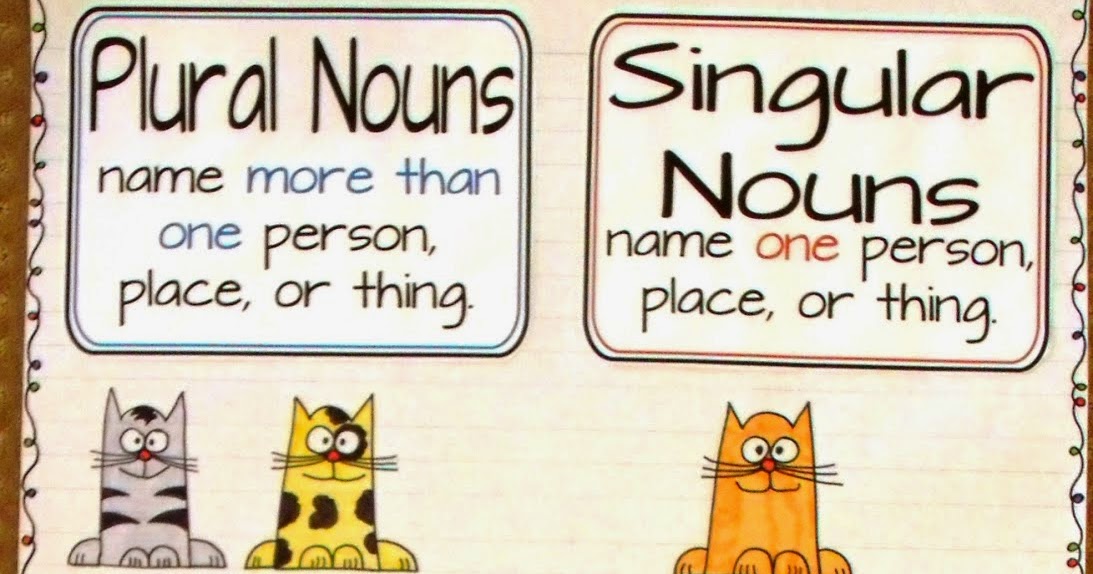
Singular Nouns
Singular means “Only one of”. When we say that a noun is singular, we are implying that there is only one of it.
Singular nouns are always preceded by the article “a”, “an”, or “the”. For example:
- a person
- a boy
- a girl
- a man
- a woman
- an animal
- a cat
- a dog
- a mouse
- a bird
- a school
- a house
- a bank
- a building
- an apple
- an orange
- a watermelon
- a fruit
- a tree
- a garden
- the child
- the parent
- the teacher
- the student
Plural Nouns
Plural means “more than one of”. When we say a noun is plural, it means that there is more than one of that noun.
Plural nouns are sometimes, not all the time, preceded by the article “the”. Plural nouns DO NOT have the article “a” or “an” in front of them. The article “a” or “an” can only be used with singular nouns. For example:
- people
- boys
- girls
- men
- women
- the animals
- the cats
- the dogs
- the mice
- the birds
- schools
- houses
- banks
- buildings
- the apples
- the oranges
- the watermelons
- the fruits
- the trees
- the gardens
- children
- parents
- teachers
- students
How do you convert a singular noun to a plural noun?
#1: Add “s” to the end of the noun
For some nouns, NOT ALL, you add an “s” at the end to create a plural noun. For example:
| Singular Noun | Plural Noun |
| boy | boys |
| girl | girls |
| cat | cats |
| school | schools |
| apple | apples |
#2: Change the “y” to “ies”
There are some nouns that end with “y”. To convert them into plural nouns, you change the “y” to “ies”. For example:
| Singular Noun | Plural Noun |
| activity | activities |
| bunny | bunnies |
| canary | canaries |
| daisy | daisies |
| enemy | enemies |
#3: Add “es” to the end of the noun
There are some singular nouns that end with “s”, “sh”, “ch”, “x” or “z”. To make them plural, simply add “es” at the end. For example:
| Singular Noun | Plural Noun |
| bus | buses |
| wish | wishes |
| church | churches |
| fox | foxes |
| quiz | quizzes |
#4: Change “f” or “fe” to “ves”
There are some nouns that end with “f” or “fe”. To make them plural, change them to “ves”. For example:
| Singular Noun | Plural Noun |
| leaf | leaves |
| knife | knives |
| hoof | hooves |
| sheaf | sheaves |
| wife | wives |
#5: Add “s” after the “y”
Not all nouns that end with “y” need to be changed to “ies”. For some of these nouns, you can just add “s”. For example:
| Singular Noun | Plural Noun |
| day | days |
| play | plays |
| boy | boys |
| monkey | monkeys |
| toy | toys |
#6: Add “s” after the “o”
There are some nouns that end with “o”. To make them plural, simply add “s” at the end. For example:
| Singular Noun | Plural Noun |
| zoo | zoos |
| photo | photos |
| piano | pianos |
| video | videos |
| radio | radios |
#7: Add “es” after the “o”
Some nouns that end with “o” can become plural by simply adding “es”. For example:
| Singular Noun | Plural Noun |
| potato | potatoes |
| tomato | tomatoes |
| hero | heroes |
| echo | echoes |
#8: Change “us” to “i”
There are some nouns that end with “us”. To make them plural, simply change “us” to “i”. For example:
| Singular Noun | Plural Noun |
| cactus | cacti |
| focus | foci |
| octopus | octopi |
#9: Change “is” to “es”
Some nouns end with “is”. To make them plural, change “is” to “es”. For example:
| Singular Noun | Plural Noun |
| analysis | analyses |
| crisis | crises |
| ellipsis | ellipses |
#10: Change “on” or “um” to “a”
Some nouns end with “on” or “um”. To make them plural, change “on” to “a”. For example:
| Singular Noun | Plural Noun |
| phenomenon | phenomena |
| criterion | criteria |
| agendum | agenda |
| millennium | millennia |
| bacterium | bacteria |
#11: Change the spelling (Irregular Nouns)
There are nouns that we call “irregular nouns”. These nouns go from singular to plural by changing the way they are spelt. For example:
| Singular Noun | Plural Noun |
| child | children |
| mouse | mice |
| man | men |
| woman | women |
| tooth | teeth |
#12: Change nothing at all
There are some nouns that have the same spelling whether they are singular or plural. No changes need to be made. For example:
| Singular Noun | Plural Noun |
| sheep | sheep |
| fish | fish |
| deer | deer |
| equipment | equipment |
| moose | moose |
Knowing whether a noun is singular or plural is crucial as you often need to let your listeners know if you are referring to one or many? For example: if you say, ‘I would like an apple, please,’ it tells the listener that you only want ONE apple. If you say, ‘I would like some apples, please,’ you are telling the listener that you want more than one apple.
 Yellow Pig Bear
One thought on “Grammar Unit 1.3: Nouns – Singular and Plural Nouns”